Nimble scaling: LHV Bank accelerates value flow and strategic alignment through Team Topologies
LHV Bank engaged with Conflux to adopt Team Topologies, resolving structural complexity by aligning product and engineering functions to value streams for accelerated delivery and continuous organizational evolution.
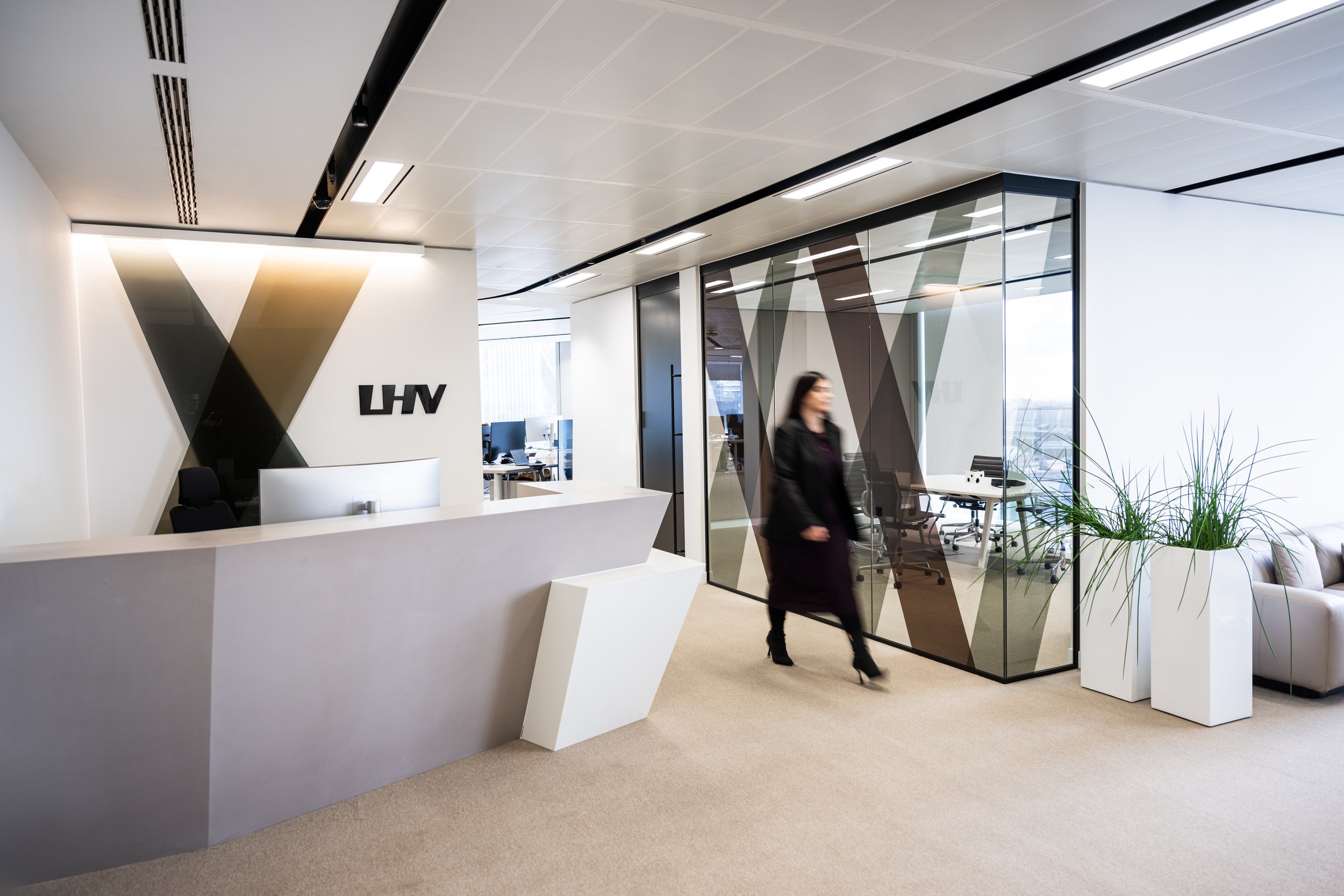
LHV office, London, United Kingdom
LHV Bank’s UK launch and rapid expansion created structural complexity, requiring coordination among multiple teams for new-feature delivery.
LHV Bank engaged Conflux to guide the adoption of Team Topologies principles within their specific context, shifting team focus from capability to value stream stewardship. This new structure aligns product and engineering functions with key business segments, establishing a foundation for continuous organizational evolution and enabling LHV to become a thriving organization, delivering at speed.
Key Takeaways:
Value stream alignment enables scaling without linear staff increases
Reduced cognitive load improves team focus and delivery efficiency
Aligning engineering costs to value streams improves financial clarity
Automating compliance guardrails provides competitive advantage
Active Knowledge Diffusion (AKD) eliminates duplication and accelerates innovation
Cross-functional alignment accelerates strategic collaboration and innovation
LHV Bank, building on its heritage as an Estonian household name, operationalized its UK banking institution in 2022. This growth included the acquisition of a lending business and the launch of a direct-to-consumer retail proposition in late 2024. The organization had seen efficiency as a defining strength, priding itself on achieving outsized outcomes with limited resources.
Although LHV maintained a culture characterized by trust, empowerment, and a focus on outcomes, rapid growth increased complexity, leading to higher coordination costs.

"The way our teams grew was very organic, adding new teams as and when we needed them, but I was starting to feel a lot of friction in delivering the retail product because now, many teams were involved. Want to build a new feature? OK, we need to bring four teams into the fold."
— Macs Dickinson, Director of Engineering, LHV Bank
Resolving structural conflict and excessive cognitive load
LHV faced a typical scaling challenge in which organizational structure began to inhibit the flow of value. Seeking insight and guidance from Conflux, LHV presented two primary concerns for resolution: scaling without adding significant staff, and managing overwhelming cognitive load.
The previous model relied on capability-based teams (web, mobile, backend), which led to a centralized backend team owning an excessive number of domains. This high cognitive burden blocked clear ownership and efficiency. LHV recognized that implementing changes without context-specific guidance could require them to potentially triple their workforce, which was not feasible or strategic.
"I’ve used the Team Topologies approach before, so we thought, 'we could do this ourselves.’ We couldn’t decide whether to focus on how change runs through our different business lines or on a product-by-product basis. Different viewpoints across the business led to different preferences, so we thought, let’s stop trying to solve this ourselves. We knew we had the answers within the company, but we needed someone to help guide us through the process.”
— Macs Dickinson, Director of Engineering, LHV Bank

“If you’ve already got things like trust, empowerment, good practices, ways of working, and engagement within the organization, then that’s a great place to start. At that point, outside expertise on Team Topologies practices can provide the perspectives you need to navigate complex decisions. Some of these techniques work best when that strong culture of empowerment and trust is already in place.”
— Matthew Skelton, CEO/CTO of Conflux, co-author of Team Topologies
Finding effective product and service boundaries using Independent Service Heuristics (ISH)
LHV team, London, United Kingdom
Independent Service Heuristics (ISH) were used to identify capabilities that were viable as independent entities, establishing internal boundaries that enable future evolution, such as providing these services as products to external consumers.
Analysis of LHV’s core domains helped the organization determine which systems provided differentiating value and which services could be outsourced or acquired commercially through SaaS investments.
"A key question was, ‘Is this thing that we're building part of our core obsession?’ If it isn't, then we should let someone else obsess about that. Let's pull in a partner, or just buy a SaaS solution".
— Macs Dickinson, Director of Engineering, LHV Bank
LHV leveraged Team Topologies principles to identify optimal value streams and define clear boundaries around them. The resulting organizational design changes created clear flows of value, aligning product and engineering teams with commercial and sales teams across LHV’s retail, banking services, and lending business segments, providing immediate benefits for delivery speed while maintaining flexibility for future changes. Stewardship of shared services was awarded to the segment teams that were the primary consumers, with the clear understanding that these services would be moved to dedicated platform teams once business volume justified the change.
Enhanced strategic alignment and financial traceability
Six months into the transformation, LHV Bank realized substantial benefits driven by empowered teams and service stewardship.
One notable outcome was the acceleration of strategic alignment. Bringing product, engineering, and commercial leaders together had resulted in enhanced, focused collaboration.
"There are things born from ideas that wouldn't have come up without that collaboration. Previously, we had so many good ideas happening in isolation, and now those conversations are happening together".
— Macs Dickinson, Director of Engineering, LHV Bank
Alignment also led to improved financial traceability. Aligning engineering costs directly to revenue streams simplified cost tracking, providing a clear picture of profitability by segment. Previously, a single engineering cost was spread across the organization, making it extremely difficult to track.
The foundational work of defining clear boundaries through Team Topologies principles resulted in a ‘register of services’, providing a map for sustainable evolution. By defining clear boundaries around value streams, LHV developed a tool to guide future team structure and platform creation in line with scaling.
"The register provides the necessary context to make educated decisions about future investment. If LHV observes that "volume's growing here, then we know that will form a new team over there".
— Macs Dickinson, Director of Engineering, LHV Bank
Rethinking compliance to enable value flow

LHV team, London, United Kingdom
LHV Bank continues to invest in its ability to release and validate value, and this organizational mindset extends to regulatory challenges. Recognizing the need for a ‘Minimum Compliant Product’ (MCP) as a foundational standard that must be met before defining a broader product scope or Minimum Viable Product (MVP), LHV aims to position compliance as an enabler rather than a blocker to value flow. The definitive nature of compliance makes it perfect for codification into automated guardrails. LHV’s guardrails are a technical manifestation of risk management, working alongside three strong lines of defence; risk ownership sits in the business as the 1st line of defence (1LoD), stewardship of the product sits in the 2LoD, and independent assurance provided by Internal Audit serves as the 3LoD.
"If you focus on your ability to release and validate value, it becomes much easier to be nimble and to pivot".
— Macs Dickinson, Director of Engineering, LHV Bank
By involving internal stakeholders early in the development lifecycle, LHV ensures that potential regulatory challenges, licensing needs, or communication requirements with regulators are understood from the outset. This places automated controls within the delivery pipeline, alongside LHV’s existing three lines of defence, solving complex compliance problems nimbly, and provides LHV with a potential market advantage.
To bolster this, LHV plans to leverage enabling teams, inspired by changes made at ING Bank, to curate and share compliance practices and knowledge across the organization. LHV’s enabling teams would focus on complex, rapidly evolving areas such as AI tooling, helping build organizational capability, and reducing wasteful duplication of discovery work.
“By making existing practice visible, teams can avoid unnecessary discovery work, choosing instead to pull from what another team has already proven is a good way of doing things.”
— Matthew Skelton, CEO/CTO of Conflux, co-author of Team Topologies
Drive engagement and accelerate innovation with Active Knowledge Diffusion (AKD)
As they continue to scale, LHV plans to formalize knowledge sharing to avoid duplication of effort and to spread knowledge, best practices, and innovations across organizational boundaries. These structures are particularly crucial in contexts where firm team boundaries are necessary for fast flow. Having ‘ground-up’ alignment enables nimble problem solving and provides market advantage, linking internal engineering success to external business opportunities.
“We have a lot of pockets of innovation, so creating visibility is key. It’s often not the successful experiments you need to see the most; you want the unsuccessful experiments too, so that when you’re working, you can ask ‘Have things changed? Could I save myself a little bit of time?’ We’ve got a good process in place for how we run experiments, record the outcomes, and then share that knowledge. That works really well.”
— Macs Dickinson, Director of Engineering, LHV Bank
Active Knowledge Diffusion
Implementing AKD can require a culture shift from knowledge hoarding to knowledge sharing. It also demands time and resources, which can be difficult to justify if your organization is currently focused solely on short-term deliverables. However, the benefits of effective AKD are substantial, and organizations with a strong approach to AKD can expect:
Faster problem-solving and rapid solution adoption organization-wide
Enhanced innovation through cross-pollinating ideas from different domains
Improved employee engagement and retention via learning and recognition
AKD also plays a crucial role in maintaining organizational agility; rapid knowledge diffusion enables your organization to adapt more quickly and cohesively.

LHV’s path to empowered excellence
LHV Bank is committed to ongoing evolution, and enabling adaptability is essential for LHV to achieve scale in revenue and impact. By intentionally fostering a structure that aligns product, engineering, and commercial functions, LHV has accelerated collaboration and reduced time-to-value. Through alignment and designing for cognitive load, they have built a truly adaptable organization, poised for empowered excellence.

LHV team, London, United Kingdom
Recommendations for sustained growth:
Codify compliance as guardrails: Automate compliance requirements into guardrails within delivery pipelines, speeding up delivery without the concerns of non-compliance.
Leverage enabling teams and Active Knowledge Diffusion (AKD): Use enabling teams to enhance the adoption of AI tools, and formalize AKD practices for accelerated knowledge sharing and reduced effort duplication.
Embrace continuous evolution: Maintain the mindset that organizational change is an ongoing evolution, using structural frictions such as rising cognitive load as a signal for necessary boundary changes and team redesign.
“It's clear to me, working with LHV, that the teams, and particularly their culture, trust, empowerment, good practices, ways of working, energy, interest, and commitment to getting things done are there. It’s a great place to start; many of these techniques work best when there's that strong culture of empowerment and trust in place already.”
— Matthew Skelton, CEO/CTO of Conflux, co-author of Team Topologies
Looking to achieve speed at scale?
Start your journey to empowered excellence with Conflux.
Whether you're seeking clarity on your approach or support with a more comprehensive transformation, Conflux supports organizations through four engagement types:
Assessments & expert sense-checks: for organizations seeking clarity on their approach
Workshops & training: for leadership teams building fast flow capabilities
Leadership ‘right-hand’ support: for individuals navigating organizational change
Driving transformations: for teams and organizations ready for comprehensive chang
Book your discovery call today to discuss your organization's specific challenges and how our proven approach can help you achieve measurable improvements.